Jumat, 08 Maret 2013

Winnie The Pooh "Pooh Go Visiting"

English`s task ^^..

*Orientation 
     Who/What ?                      Pooh and Rabbit 
      Where?                             Rabbit`s House 
      When?                              One day , at 11 am . 


*Complication                        
                                               Pooh visiting Rabbit to eat something .                        
     What Happened
     one day ?

*Resolution                            Rabbit offer milk or honey for Pooh . 
                                               Pooh said both of them . 

*Complication                       There`s no meal again for Pooh , but                                            
                                               Pooh still hungry .

*Resolution                           Pooh wanted go but Pooh still look at                      
                                              Larder . 

*Re-orientation                     Pooh went back to his home with 
                                              himself and said Pooh wanted to go 
                                              there again . :)
                                                 

Rabu, 30 Januari 2013

KOREA CLIMATE

hello everyone , iam back again . 
in my last enty is talked about fiscially and government .
now , i will share about korea climate .
did you realize when you watch drama or movie korea ? they always show us about his climate when spring , summer , autumn , and winter .. 
they show us how it look a like in their country ..
so , i will  share about climate ..
hope you like it . 


SOUTH KOREA CLIMATE


South Korea is a country located in East Asia, specifically covering the southern part of the Korean Peninsula.
North Korea is the only country that borders with South Korea, with a 238 km long border set by DMZ (Military Demarcation Line). Its area mostly surrounded by water and has a long coastline of 2413 km. Bounded west by the Yellow Sea, south of the East China Sea, while the east by the waters of the Sea of ​​Japan. Overall land area is 100,032 km ² and a wide waters just 290 km ².


South Korea has many small islands off the coast waters. Is the largest island of Jeju-do, located in the southern part of the peninsula with an area of ​​1825 km ². Another important Ulleung Island in the Sea of ​​Japan and Ganghwa in the waters west. Although most of the coastal area has a flat line, the southern and western coast berteluk-bay and have a vast muddy plain.
The highest mountain in South Korea is Hallasan (1,950 m), located on the island of Jeju. There are 3 major mountain range in South Korea, the Taebaek, Sobaek and Jiri.
Only 30% of South Korea's land is low-lying, because most of the land is upland and mountainous. Lowlands are mostly situated on the west coast and in the valleys of the main rivers. Lowland plains important is the Han River which includes Capital Seoul, Pyeongtaek plains on the west coast, Valley Geum River, Nakdong River Valley, Yeongsan and Honam plains in the southwest. Lowlands on the east coast narrower.
Nakdong River is the longest river, which is 521 km. Han River that flows through Seoul length is 514 km. Another important river is the Geum River, 401 km in length, the River Imjin and Bukhan that disgorge from North Korea, as well as Seomjin River. The main large rivers flowing from north to south or from east to west.
Climate
South Korea because it is located in a temperate region of East Asia precipitation. The influence of air time over the plains of Asia to the weather in South Korea compared to the influence of the Pacific Ocean. The winter season lasts 3 months with dry weather conditions. While the short summer, but very hot, wet and humid. Weather appears in the spring and autumn. In the capital Seoul's average temperature in January is -5 ° C to -2.5 ° C; in July ranged from 22.5 ° C to 25 ° C. Jeju Island is located in the most southern part, received a warmer climate than the mainland, range from 2.5 ° C in January and 25 ° C in July.
Although South Korea is less vulnerable to typhoons than Japan, Taiwan, the east coast of China or the Philippines, the impact could be huge. Each year there are 1 to 3 pieces of typhoon moving to the peninsula. Typhoons usually strikes in late summer and bring a very high rainfall. Typhoon triggered floods and landslides in various parts of South Korea.
One big typhoon to hit mainland Korea is Typhoon Prophet (Jolina) on 8 September 2005 that killed eight people.


NORTH KOREA CLIMATE


North Korea is located in East Asia in the northern region of the Korean Peninsula. North Korea's border with China, separated by the River Amnok, Duman with Russia by River and South Korea by the Korean Demilitarized Zone (DMZ). Yellow Sea in the west and the Sea of ​​Japan in the east.


Its area is 120.540 km ² which consists of 120.410 km ² land and 130 km ² waters. Panjangperbatasan whole is 1673 km, with a length of 1416 km border with the People's Republic of China, 238 km with South Korea and 19 km with Russia.
North Korea has an uneven coastline (berteluk-bay) along 2495 km.
North Korea's extreme elevation point is as follows:
• The lowest point: Sea of ​​Japan 0 m asl
• Highest point: Mount Baekdu (Paektusan) 2744 m
About 80 percent of the North Korean mainland are plateaus and mountains and all points above 2000 meters in the peninsula in its territory. The concentration of the population in low-lying areas.
Baekdu Mountain which is the highest point, is a volcano with a crater the width of the border with the PRC. The series is composed Hamgyong get to the east coast and have high peaks sepertiGunung Gwanmo (1756 m). Another series that make up the North Korean mainland include the Rangrim Mountains that separate the lowlands in the west and east, on the border with the Kangnam Series PRC, and Taebaek circuit that runs through South Korea. The highest peak is Mount Kumgang series Taebaek (1638 m).
Lowland very small percentage. Pyongyang and Chaeryong lowland in the west has an area of ​​500 sq km, while the east of the peninsula more narrow.
Mountains in the north and western parts of North Korea is a wellspring for important rivers, which flows to the west and east. To the west, major rivers empties into the Korea Bay and the Yellow Sea. The longest river is the Amnok River, limiting the area of ​​the PRC and navigable along 678 from 790 km in length. Duman River is the longest river to flow-2 with 521 km to the Sea of ​​Japan. Duman River is only navigable along 85 km due to the mountainous topography. Taedong River that flows through the city of Pyongyang is 394 km in length is the longest river-3, flows into the Yellow Sea .

It`s the reason why them have a nice climate , as we wacth at drama or movie .
okey . thanks for visit my blogg .. :)

Jumat, 04 Januari 2013

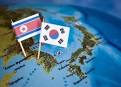
South Korean and North Korean NOW !

Hello everyone ,  now i want explain Korean in 21st Century .
As we know Korean now , i want expain about fisically and goverment . 


~*~*~*~South Korean ~*~*~*~


South Korea is a country in East Asia that includes the southern portion of the Korean Peninsula.  


In the north, the Republic of Korea North Korea
Yellow Sea to the west, Japan is across the Sea of ​​Japan (called the "East Sea" by the people of Korea) and the Korea Strait in the southeast. The capital of South Korea is Seoul (서울).


Government

South Korea is a republic. As in other democratic countries, South Korea's government divided into three parts: the executive, judicial and legislative. The executive is held by a president elected by the results of the election for a term of 5 years and is assisted by a Prime Minister who is appointed by the president with the approval of parliament.
 
Establishment

 *Founding Gojoseon 2333 BC
 *Declaration of Republic      March 1st ,  1919
 *Provincial Government April 13rd ,1919 
 *Liberation August 15, 1945
 *Constitution July 17, 1948
*Proclamation  August 15, 1948

extensive state : total 100.032 km2 (108) 

Water :(%) 0.3%

residenct : estimate 2008 around  48,379,392 


~*~*~*~North Korean~*~*~*~


The capital and largest city is Pyongyang. The Korean Demilitarized Zone being the boundary between North Korea and South Korea. Amnok River and the Tumen River form the border between North Korea and the People's Republic of China. Some of the Tumen River in the northeast is the border with Russia.


Government

North Korea is a country that unilaterally declare a state Juche (trust and rely on its own power).  The cult of personality of the Kim Il-sung and Kim Jong-il is now organized. After the death of Kim Il-sung in 1994, he was not replaced but instead received the title "Eternal President", and was buried in the Kumsusan Memorial Palace in central Pyongyang.
Although the position of president was held by Kim Il-sung died,de facto head of state is Kim Jong-un, who is Chairman of the National Defence Commission of North Korea. The legislature of North Korea is the Supreme People's Assembly, currently led by Kim Yong-nam. Other senior government figure is the Chief Executive Kim Yong-il.
North Korea is a country that adheres to the one-party system. The governing party is the Democratic Front for the Reunification of the Fatherland, a coalition of the Labour Party of Korea and two other smaller parties, the Korean Social Democratic Party and the Party Chongu Chondoist. These parties nominate all candidates for the position and hold all seats in the Supreme People's Assembly.

Establishment
Declaration of independence  March 1, 1919
Liberation August 15, 1945
Official Declaration  9 September 1948


extensive state : Total 120,540 km2   
Water :(%) 4,87

residenct : estimate 2009 around  23.906.000

thank you ^^
read and share with me . :)


Kamis, 01 November 2012

The Korean War


 This time is for discuss about the Korean War . :D


The Korean War (Korean: 한국 전쟁), from June 25, 1950 until July 27, 1953, was a conflict between North Korea and South Korea. 
 Date Full-scale: 25 June 1950 – 27 July 1953
                             (3 years, 1 month and 2 days)
Low-level
: 27 July 1953 – present

 
Status
  • Cease-fire armistice
  • North Korean invasion of South Korea repelled
  • U.N. invasion of North Korea repelled
  • Chinese invasion of South Korea repelled
  • Korean Demilitarized Zone established, little territorial change at the 38th parallel border, essentially uti possidetis
 Territorial  changes : Korean Demilitarized Zone established; both sides gained little border territory at the 38th parallel


Strength
  • South Korea 600,000
  • United States 302,000
  • United Kingdom 14,200
  • Canada 6,150
  • Turkey 14,936
  • Netherlands 3,972
  • Ethiopian Empire 3,158Australia 2,280Philippines 1,500
  • New Zealand 1,390
  • Thailand 1,290
  • Kingdom of Greece 1,2
  • France 1,120
  • Colombia 1,070
  • Belgium 3,171
  • Union of South Africa 300
  • Sweden 170
  • Norway 105
  • Denmark 100
  • Italy 72
  • India 70
  • Luxembourg 78
Total: 941,600

Current
  • South Korea 653,000
  • United NationsUnited States 28,500
Total: 681,500
  • North Korea 260,000
  • China 1,350,000
  • Soviet Union 26,000
Total: 1,636,000
Note: The figures vary by source; peak unit strength varied during war.


Current
North Korea
1,106,000


  • Total civilians killed/wounded: 2.5 million (est.)
  • South Korea: 990,968
    373,599 killed
    229,625 wounded
    387,744 abducted/missing
  • North Korea: 1,550,000 (est.)


This war is also called "war-mandated" (English proxy war) between the United States and its UN allies and the communist People's Republic of China and the Soviet Union (as well as members of the United Nations). Participants major war is North Korea and South Korea. South Korea's main ally, including the United States, Canada, Australia, and the United Kingdom, although many other nations sent troops under the UN flag .


Although the United Nations received a lot of messages telling you that North Korea will do an invasion, the UN rejected all of them. Before the war, in early 1950, the CIA station officer Douglas mackiernan China received intelligence forecasts China and North Korea, which predicts that the army would attack North Korea to the South.

In the name of provocation South Korea, the North Korean Army (North Korean soldiers) crossed the 38th parallel, assisted artillery fire Sunday morning on June 25, 1950.  North Korean army said that troops of the Republic of Korea (ROK), under the leadership of "bandit traitor Syngman Rhee ", had crossed the border" first ", and they would arrest and execute Rhee.  In previous years, the two Koreas have attacked each other.
North Korea started the "Fatherland Liberation War" by land and air invasion with 231,000 soldiers, who managed to control objects and areas such as planned Kaesong, Chuncheon, Uijeongbu, and Ongjin, which they get after deploying 274 tanks T-34- 85, 150 Yak fighters, 110 bombers, 200 artillery pieces, 78 Yak aircraft exercises, and 35 spy plane.

In addition to the invasion force, the North army has 114 fighters, 78 bombers, 105 T-34-85, and 30,000 troops based in North Korea. In the sea, although it only consists of several small warships, as well as a battle considerable debate between the two.

On the other hand, the South Korean army is not yet ready. In South to the Naktong, North to the Yalu (1998), RE Applebaum reported that South Korean troops have a low level of combat readiness on June 25, 1950. South Korean soldiers only had 98,000 soldiers (65,000 combat troops, 33,000 troops backers), do not have tanks, and 22 aircraft comprising 12 liaison aircraft type and 10 AT6 training planes. Other than that no foreign troops based in Korea at that time - despite the U.S. bases in Japan.

The situation in the Pusan ​​Perimeter had turned; North Korean soldiers and supplies were running low on people while in the Republic of Korea forces have gained an additional weapons and ammunition.  In order to assist the defense in the Pusan ​​Perimeter, General MacArthur recommended an amphibious landing at Incheon, behind the lines North Korea's defense.  On 6 July, he ordered Major General Hobart Gay, commander of the First Cavalry Division, to plan for the amphibious landing on July 12 to 14, First Cavalry Division depart from Yokohama to help Invantri 24th Division.

IMPASSE (July 1951—July 1953)


Armistice negotiations continued for two years,  at Kaesong (southern North Korea), then at Panmunjon (the border of the two Koreas).  The main problem of negotiation when it is repatriated prisoners of war.  China, North Korea , and the UN troops could not make a deal because a lot of Chinese and North Korean soldiers who refused to return to the North.  In a recent ceasefire agreement, the Repatriation Commission Neutral Nations was formed to deal with the problem.


In 1952, the U.S. elected a new president, and on 29 November 1952, President-elect Dwight D. Eisenhower flew to Korea to learn the things that might end the Korean War.  On July 27, 1953, a ceasefire proposal of India approved by North Korea, China, and the UN troops so they agreed to a ceasefire with the boundary parallel to-38. In a written agreement that the parties involved in creating sebuaeh Korean Demilitarized Zone. UN troops, backed by the United States, North Korea and China signed the Ceasefire Agreement; South Korean President Syngman Rhee refused to sign the treaty, the Republic of Korea therefore considered not participating in the agreement  .


Aftermath Battle of Chosin: Operation Glory .


After the war, UN forces troops to bury the dead in the cemetery while on Hŭngnam. With Operation Glory (July-November 1954), each party exchanging bodies troops. 4167 The bodies of Army and Marine Corps by 13,528 dead soldiers exchanged China and North Korea. A total of 546 civilians were killed in the UN POW camp handed over to the government of South Korea.  After Operation Glory, 416 "unknown soldier" was buried in the Punchbowl Cemetery, Hawaii.  


END THE WAR

This war ended on July 27, 1953 when the United States, China, and North Korea signed a cease-fire agreement. South Korean President Syngman Rhee, refused to sign it but promised to respect the ceasefire agreement. But officially, the war is not over until now.